
MadZOOng








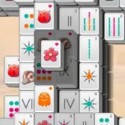

You trace a connector line between two identical zoo tiles across a MadZOOng board, watching it bend around a stack of crates to reach its target, and just as the match lands, a crate shifts and the whole layout you'd been reading a second ago is different. That's the rhythm MadZOOng runs on: a familiar matching puzzle that refuses to stay still under you.
| Genre | Tile-matching puzzle with arcade pacing |
| Core rule | Connect two identical animal tiles with a path of limited turns |
| Level count | Over 100 levels |
| Access | Instant browser play, tuned for desktop and mobile |
The Connect Rule at the Heart of MadZOOng
MadZOOng borrows its core rule from mahjong-connect style puzzles: two identical animal tiles can be cleared only if a path exists between them that doesn't bend more times than the game allows. It isn't enough for two matching tiles to simply share the board — the connector line between them has to actually reach, weaving around whatever's in the way within a limited number of turns.
New players tend to click every visible matching pair on sight, only to discover the game refuses the match because the path between them turns one too many times. That rejection is the whole tutorial MadZOOng gives you, and it teaches the real skill fast: read the board for legal connections, not just for matching icons.
Crates, Shifting Layouts, and Why the Board Won't Hold Still
Where MadZOOng separates itself from a static matching puzzle is the crates. As tiles clear and the board empties out, crates shift to fill gaps, rearranging what's accessible and what's blocked in ways a player can't fully predict from the layout at the start of a level. A path that was legal two moves ago can close off entirely once a crate slides into it.
This is where the game earns its arcade-pacing description rather than sitting purely in the puzzle category. Players who pause too long deliberating over a "perfect" move often find the board has reorganized itself by the time they commit, turning a planned sequence into a scramble. Reacting to the current board state, rather than planning three moves deep the way a static puzzle rewards, is the more consistent approach.
Stampedes and Tile Shuffling as Mid-Level Pressure
Beyond the shifting crates, MadZOOng introduces stampede events and tile-shuffling moments that actively scramble a board mid-level. A stampede in particular changes the pacing of a level from deliberate matching into something closer to reactive scanning, forcing a player to re-read the entire layout rather than continue working from whatever plan they'd built up.
Tile shuffling works similarly but with a different flavor of disruption — instead of animals stampeding through, the tiles themselves reorganize, breaking any mental map a player had built of where specific matches were sitting. Both events are the game's way of making sure a level never fully settles into a solved, predictable state before it's over.
Boss-Level Beasts and the Levels That Feel Different
Certain levels in MadZOOng introduce boss-level beasts, tile-clearing obstacles or events large enough to reshape a chunk of the board at once rather than the smaller, incremental disruptions of a normal stampede. These levels play noticeably differently from the standard matching flow, since a large chunk of the board can become inaccessible or newly opened in a single event.
Community discussion around MadZOOng tends to single these levels out specifically, since they break the rhythm players have built up over the earlier, calmer levels. Some players enjoy the sudden shift in approach these levels demand; others find them a frustrating departure from the connect-and-clear loop that got them invested in the first place — a split that shows up consistently whenever the topic comes up.
Escalating Difficulty Across 100-Plus Levels
With over 100 levels, MadZOOng has room to escalate its disruption events gradually rather than throwing stampedes and boss beasts at players from the start. Early levels tend to function closer to a standard connect-the-pairs puzzle, letting players internalize the limited-turn path rule before crates, shuffling, and larger events start layering on top of it.
By the time a player reaches the later stretch of levels, MadZOOng has effectively combined all of its systems into a single test: read the board, find a legal path, account for what a crate shift or stampede might do to that path before committing, and do all of that faster than the disruption events can undo the plan. That combination is where the game's difficulty curve actually lives, rather than in any single mechanic on its own.
Playing MadZOOng Without a Download
MadZOOng runs directly in the browser with no download required, and the interface is built to work across both desktop and mobile screens without losing the precision the connect-path rule depends on. That accessibility matters for a puzzle game whose core challenge is short bursts of focused reading rather than long uninterrupted sessions — it's the kind of game that fits into a spare few minutes as easily as a longer sitting.
What's the biggest mistake new players make in MadZOOng?
Clicking on any two visually matching animal tiles without checking whether a legal connector path actually exists between them — the path can only bend a limited number of times, and tiles blocked by crates or other tiles beyond that limit won't clear even if they're an obvious visual match.
Why does the board keep changing between moves?
Crates shift to fill gaps as tiles clear, and separate stampede or tile-shuffling events can scramble the layout mid-level, meaning a legal path spotted a few seconds earlier isn't guaranteed to still be open by the time a player acts on it.
Are all 100-plus levels the same difficulty?
No — MadZOOng escalates gradually, with early levels functioning close to a standard matching puzzle and later levels layering crate shifts, stampedes, tile shuffling, and boss-level beast events on top of the base connect rule, which is where most of the game's difficulty actually comes from.
MadZOOng never abandons its basic promise — find two matching animal tiles, connect them, clear them — but everything built around that promise, from shifting crates to stampeding boss beasts, exists to make sure that promise never gets boring across more than a hundred levels. Anyone who's had a clean path close off between one glance at the board and the next understands why the game earns the "mad" in its name.