
Clash of Dots
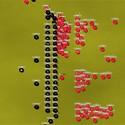










In Clash of Dots you start every match owning a handful of cells and nothing else — no army, no upgrades, just a foothold on the map — and that starting condition is what forces every early decision to matter more than it would in a slower strategy game.
Capturing Cells Is the Only Objective in Clash of Dots
The entire win condition in Clash of Dots comes down to one thing: capture all of the enemy's cells in the arena. There's no secondary resource to hoard and no tech tree to climb outside of that goal — every dot you gather and every troop you send exists to take a cell away from someone else or to hold one you already own.
Cells start out either neutral or owned by a rival, and sending troops to seize a neutral cell is the cheaper, safer opening move compared to attacking a defended rival cell directly.
Gathering an Army of Dots
Your army in Clash of Dots is made up of dots that accumulate inside cells you control, and the pace at which that army grows is tied directly to how many cells you're holding at once. Losing a cell doesn't just cost territory — it slows the whole engine that was feeding your next attack.
Two Opening Approaches Players Actually Use
There isn't one correct way to start a match. Some players launch a full-scale attack immediately, betting that early aggression outpaces the opponent's defenses before they're set up. Others deliberately provoke the opponent into making the first move, letting them waste dots attacking a defended cell before counterattacking into the gap that leaves behind.
Both approaches show up constantly in how people talk about the game, and neither is treated as objectively better — which side you commit to usually comes down to how the specific map's cells are laid out.
Upgrading Buildings and Defenses in Clash of Dots
Buildings inside your cells can be upgraded, and a defended cell with upgraded buildings is meaningfully harder to take than an undefended one sitting on raw dot count alone. Exhausted cells are the term for rival cells that spent most of their dots on a failed attack — retaking one of these is far cheaper than attacking a cell at full strength, and defending what you hold while watching for exhausted cells is treated as just as valid a path to winning as constant offense.
Spending Coins on Skins
Coins earned from matches can be spent on skins for defense buildings, attacking towers, and your fighters. None of this affects how the cells are captured mechanically — it's purely cosmetic — but it's the main long-term reason players keep returning to Clash of Dots between matches.
What happens if you lose a match in Clash of Dots?
Losing costs you the coins you'd built up from previous matches, which is one of the sharper risk-reward hooks in the game — it means a losing streak has a real cost beyond just the match itself, not just a reset back to zero.
Is there a way to win without attacking first?
Yes — provoking an opponent into wasting dots on your defended cells, then counterattacking once they're spent, is a recognized way to win without ever committing to the first strike.
Do upgraded buildings make a cell impossible to capture?
No. Upgrades raise the cost of taking a cell but don't make it unconquerable — a large enough concentrated attack from accumulated dots can still overwhelm an upgraded defense.
Clash of Dots keeps its rules simple enough to explain in a sentence, but the actual matches come down to reading how someone else is expanding their dots and deciding, cell by cell, whether to hit them first or let them come to you.