
Learn To Fly
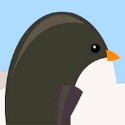






In Learn to Fly, you start with nothing but a bare ramp at the edge of the ice and a penguin who has never gotten off the ground, and that starting point is what the rest of the game measures itself against. Every run begins from that same zero, and how far the penguin travels this time compared to last time becomes the only score that matters.
Launching in Learn to Fly
The core of Learn to Fly is a launch-and-glide loop: the penguin rides the ramp, gets airborne, and covers as much distance as the current setup allows before gravity wins. Distance earns currency, and that currency goes straight back into the setup for the next attempt. There's no separate "practice mode" — every launch is both an attempt at distance and a funding run for the next upgrade.
What catches new players off guard is how much a single upgrade tier changes the feel of a launch. A run with the base ramp and starting glider barely gets the penguin off the ice, while a handful of upgrades later the same ramp sends it soaring across the whole visible course. The distance gap between an unupgraded and a mid-upgraded run in Learn to Fly is enormous relative to how few purchases it takes to get there.
Gliders, Rockets, and Where the Money Goes
Learn to Fly offers a genuinely small equipment list by design — three gliders and three rockets, plus boosts layered on top of them — which keeps the upgrade decisions readable instead of overwhelming. Choosing between saving for the next glider tier or the next rocket tier is the recurring decision that shapes a run's pacing.
Rockets in particular reward a specific kind of timing rather than just raw power: firing one too early burns it before the penguin has built up useful speed, and firing too late wastes distance the rocket could have added. Players who treat the rocket as an automatic button instead of a timed one tend to plateau well below what their glider tier should be capable of producing.
- Ramp upgrades affect launch speed at the very start of a run, before the glider or rocket does anything.
- Glider upgrades change how efficiently the penguin holds altitude once airborne.
The Four Upgrade Meters in Learn to Fly
Beyond gliders and rockets, Learn to Fly tracks four separate upgrade meters that each nudge a different part of the flight. Spreading currency evenly across all four sounds reasonable but tends to underperform compared to pushing one or two meters further before touching the rest, since a glider that's only slightly better than the base model doesn't change the run's ceiling the way a fully committed upgrade does.
This is where Learn to Fly quietly becomes a small optimization problem disguised as a physics toy. The penguin's flight path is short enough, and repeatable enough, that players start noticing exactly which meter is currently the weak link holding their distance back, and the run after run habit of "one more launch to test the new upgrade" is a large part of why the game holds attention as long as it does.
Reading a Short Flight for Long-Term Gains
Because Learn to Fly is a fairly short game by design — three gliders, three rockets, four meters, nothing more sprawling than that — there's no long grind hiding the ceiling from a player. That compactness is also what players tend to bring up when discussing the game: it's over quickly enough that the entire upgrade path is visible almost from the start, which some players find satisfying and others find limiting once they've seen everything the base setup has to offer.
Every launch still ends the same way for every player, penguin included: a splash, a distance number, and the choice of whether to spend it immediately or bank it for the next tier. That loop, small as it is, is the entire game, and it's also the reason a "one more try" run in Learn to Fly rarely stays just one.
Learn to Fly never pretends to be more than a penguin trying to get airborne with an ever-improving ramp setup, but the gap between that first flat launch and a fully-upgraded flight across the whole course is where the game earns its name. Anyone who's watched their penguin finally clear a distance that looked impossible three launches earlier knows exactly why the title isn't ironic.