
Babel Legacy
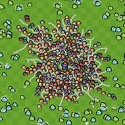





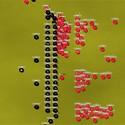




Legacies in Babel Legacy do not work the way a normal upgrade tree does — you are not picking permanent boosts, you are picking choices that shape one run and then get set aside for the next. That single quirk is what turns a game about watching a city grow into something you keep coming back to.
| Genre | Idle city-building |
| Format | Public demo, full release dated October 7, 2026 |
| Core loop | Gather legacies, expand the civilization |
Gathering Legacies in Babel Legacy Instead of Just Resources
The demo of Babel Legacy frames its whole loop around collecting legacies to advance a civilization rather than stacking a single generic resource. You mostly sit back and watch the city expand, but the legacies you gather along the way are what actually decide how that expansion looks by the end of a session.
Because the demo is a preview of a game not releasing in full until October 7, 2026, the scope of what's playable right now is intentionally limited — the loop is there, but it is a slice of a larger civilization-building game still being finished.
Per-Run Upgrades Give It a Roguelike Shape
What separates Babel Legacy from a typical idle game is that the upgrades you choose apply per run, not permanently across every session. That roguelike layer is a deliberate answer to the most common complaint about idle games: doing the same thing repeatedly with only minor improvements. Here, each run's legacy choices push the civilization in a slightly different direction than the last one.
New players tend to treat the early legacy choices as throwaway decisions, since nothing in the interface forces you to slow down and weigh them. That habit catches up with players a few minutes in, once it becomes clear how much a single early legacy pick shapes what the rest of the run can build toward.
What Babel Legacy Means by a Civilization That Never Fades
The stated goal inside Babel Legacy is building a grand empire that will never fade with the passage of time, which frames the idle pacing as patience rather than neglect — the city is meant to be left running and checked on, not actively managed second to second.
That patience-first design is also the most divisive part of the demo among players used to faster idle loops: some find the slower unfolding of a civilization satisfying to watch, while others compare it unfavorably to idle games that hand out visible progress far more often.
Babel Legacy's demo is a small window into a much bigger promise — a civilization built one legacy at a time — and it's the run-to-run variation in those legacy choices, not the idle ticking itself, that gives the current build its staying power ahead of the full October 7, 2026 release.